 Startrend International Magazine For Your Latest News And Entertainment Gists


Opinion:
…How Nigeria’s Hard-Won Sporting Reform Risks Being Undermined by Political Patronage
BY LANRE OGUNDIPE
Nigeria’s long and painful journey to restore credibility within the global sporting system may now face one of its most critical tests.
After nearly two decades of institutional struggle to comply with international anti-doping regulations, troubling signals are emerging that political considerations may once again be creeping into a technical regulatory space where competence – not patronage – must prevail.
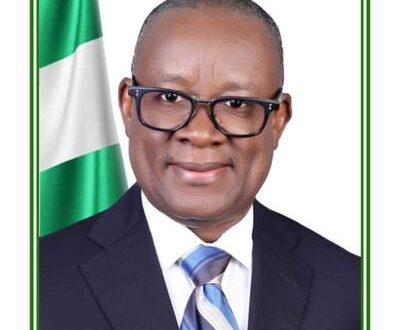
At the centre of the controversy is the proposed appointment of Mainasara Illo as Executive Secretary of Nigeria’s newly established national anti-doping authority.
For many within the sports governance community, the nomination has raised a deeper question: can a regulatory institution designed to protect the integrity of Nigerian sport survive if its leadership is determined by political convenience rather than professional expertise?
A Reform Born Out of Crisis
Nigeria did not arrive at the creation of a national anti-doping authority easily.
For nearly twenty years, the country struggled to maintain compliance with the global anti-doping regime administered by the World Anti-Doping Agency (WADA).
During that period, Nigeria operated through temporary anti-doping arrangements that lacked strong legal authority and institutional independence.
These weaknesses repeatedly exposed the country to the risk of sanctions under the global anti-doping code.
The situation became even more sensitive following a series of high-profile doping scandals involving Nigerian athletes.
Among the most prominent cases were those involving Olympic sprinter Blessing Okagbare, investigations involving Divine Oduduru, and the suspension imposed on long-distance runner Blessing Solomon.
Each case added another layer of international scrutiny to Nigeria’s anti-doping system.
The message from international regulators was unmistakable: Nigeria needed a credible, independent, and technically competent anti-doping authority.
The Law That Saved Nigeria from Possible Sanctions
The turning point came when the Federal Government initiated legislative reforms aimed at establishing a statutory anti-doping institution.
The reform process gained momentum under John Enoh, who approached the Presidency with a proposal to establish a national anti-doping authority capable of meeting international regulatory standards.
The drafting of the legislation involved collaboration between anti-doping technocrats, sports medicine experts, the Office of the Attorney-General of the Federation, and international regulatory bodies.
The resulting law placed the anti-doping agency under the Office of the Secretary to the Government of the Federation (SGF) – a deliberate structural decision intended to ensure independence from sports political structures.
This governance model mirrors international practice.
Countries such as South Africa, Australia, and Kenya operate anti-doping agencies that are structurally insulated from sports political interference in order to guarantee regulatory credibility.
Nigeria’s reform was designed to replicate that model.
The Experts Behind Nigeria’s Anti-Doping Reform
Behind the scenes of the reform effort was a small but dedicated group of Nigerian anti-doping professionals who worked tirelessly to prevent the country from falling into full regulatory non-compliance.
Among them was Mrs. Fadeke Fadebiyi, the immediate past head of the National Anti-Doping Committee, widely respected both nationally and internationally for her role in preventing sanctions against Nigeria.
Other notable experts include Prof. Ken Anugueje, a sports scientist and medical practitioner deeply involved in anti-doping governance within athletics institutions.
Dr. Samuel Ogbondeminu, a respected sports physician, served as Head of Medical and Anti-Doping for the African Union Games and received commendation from international regulators for his leadership during the Accra African Games.
Also within this professional circle are Dr. Akin Amao, one of Nigeria’s most recognised sports medicine practitioners, and Pharm. Femi Ayorinde, an experienced anti-doping testing specialist and former head of the National Anti-Doping Committee.
Yet insiders within the sports governance community say that many of these professionals have now been sidelined in the process of establishing the new agency.
A Technically Sensitive Institution
Anti-doping governance is not simply administrative work.
It involves complex systems such as:
• athlete biological monitoring
• doping control testing protocols
• laboratory analysis procedures
• investigative intelligence gathering
• disciplinary adjudication processes
• compliance reporting to international regulators.
These responsibilities require deep technical knowledge and specialised expertise.
Countries that successfully manage anti-doping systems typically appoint leaders with professional backgrounds in sports medicine, regulatory governance, or anti-doping administration.
A Dangerous Gamble for Nigeria
Critics warn that appointing leadership without such expertise could expose Nigeria to renewed scrutiny under the global anti-doping code. The consequences could be severe.
Countries deemed non-compliant with international anti-doping regulations can face sanctions that include suspension of national federations, restrictions on athletes competing internationally, and loss of rights to host global sporting events.
In extreme cases, athletes from affected countries may be forced to compete under neutral status rather than their national flags.
Nigeria has come dangerously close to such sanctions before.
The creation of the anti-doping authority was intended to prevent that scenario.
Lessons from the Past
Nigeria’s sports administration history has also witnessed governance controversies surrounding major international events, including issues that emerged following the 2003 All-Africa Games.
Those historical experiences highlight the importance of ensuring that regulatory institutions within the sports sector are led by individuals possessing strong professional competence and integrity.
The Moment of Decision
Nigeria now stands at a crossroads.
After nearly twenty years of institutional struggle to build a credible anti-doping framework, the country must decide whether the leadership of that system will reflect technical competence or political patronage.
The decision will carry consequences far beyond administrative appointments.
It will determine whether Nigeria’s athletes compete on the world stage with credibility – or under the shadow of regulatory suspicion.
For a nation that prides itself on sporting excellence, the integrity of its anti-doping governance system is not merely a bureaucratic matter.
It is a test of national commitment to fair competition.
And the world is watching.
*Lanre Ogundipe is a Public Affairs Analyst; Former President, Nigeria Union of Journalists and Former President, African Union of Journalists writes in from Abuja, Nigeria.